A new analysis describes a third wave of American philanthropy fueled by AI equity stakes including the OpenAI Foundation's 26% holding valued at roughly $220 billion
Projected annual inflows of $35 billion could fund new universities.






it will be very hard to productively spend this scale of philanthropic capital effectively, it seems already quite hard
 Nan Ransohoff@nanransohoff
New blog post: The third wave of American philanthropy Hundreds of billions of dollars in new philanthropic capital will soon become liquid. The OpenAI Foundation holds 26% of OpenAI, worth about $220B at today’s valuation. Anthropic’s seven co-founders have pledged to give away 80% of their wealth and have instituted the most aggressive donor matching program for employees in tech history. How much does this all add up to? And how meaningful is that in the context of philanthropy today? I was doing some simple napkin math to wrap my head around the scale of what’s coming, and radicalized myself in the process. I had dramatically underappreciated the scale of the philanthropic capital that’s about to become available and the corresponding gap in talent and organizations that will be needed to make the most of it. This piece aims to directionally sketch the scale of what’s coming, the gap in operational capacity needed to absorb it, and what we can do to fill it. (Link to full post in reply)
 #70Dwarkesh Patel@DWARKESH_SP
One of the most important and under appreciated trends in the world right now.
1. 100s of billions of dollars will soon be available to solve big problems (making the world resilient to ASI, ending factory farming, etc). 2. The projects and organizations which will turn billions of 2027/28 dollars into impact need to be started NOW. 3. We need really talented people to start and run and work for these new projects. What @nanransohoff calls general managers, who feel personally resposible for solving one of the world’s important problems.
What is especially scarce are detailed visions about what making AI go well looks like. These will help inform what problems these new projects ought to work on.
Nan Ransohoff@nanransohoffNew blog post: The third wave of American philanthropy Hundreds of billions of dollars in new philanthropic capital will soon become liquid. The OpenAI Foundation holds 26% of OpenAI, worth about $220B at today’s valuation. Anthropic’s seven co-founders have pledged to give away 80% of their wealth and have instituted the most aggressive donor matching program for employees in tech history. How much does this all add up to? And how meaningful is that in the context of philanthropy today? I was doing some simple napkin math to wrap my head around the scale of what’s coming, and radicalized myself in the process. I had dramatically underappreciated the scale of the philanthropic capital that’s about to become available and the corresponding gap in talent and organizations that will be needed to make the most of it. This piece aims to directionally sketch the scale of what’s coming, the gap in operational capacity needed to absorb it, and what we can do to fill it. (Link to full post in reply)
 #94Sholto Douglas@_SHOLTODOUGLAS
Very good essay
Nan Ransohoff@nanransohoffNew blog post: The third wave of American philanthropy Hundreds of billions of dollars in new philanthropic capital will soon become liquid. The OpenAI Foundation holds 26% of OpenAI, worth about $220B at today’s valuation. Anthropic’s seven co-founders have pledged to give away 80% of their wealth and have instituted the most aggressive donor matching program for employees in tech history. How much does this all add up to? And how meaningful is that in the context of philanthropy today? I was doing some simple napkin math to wrap my head around the scale of what’s coming, and radicalized myself in the process. I had dramatically underappreciated the scale of the philanthropic capital that’s about to become available and the corresponding gap in talent and organizations that will be needed to make the most of it. This piece aims to directionally sketch the scale of what’s coming, the gap in operational capacity needed to absorb it, and what we can do to fill it. (Link to full post in reply)
 #109Joshua Achiam@JACHIAM0
One of the most important opportunities to do good in the near term! The scale of philanthropy will increase radically and the scale of some individual philanthropies - like the OpenAI Foundation - could allow them to operate unprecedented public benefit programs.
Nan Ransohoff@nanransohoffNew blog post: The third wave of American philanthropy Hundreds of billions of dollars in new philanthropic capital will soon become liquid. The OpenAI Foundation holds 26% of OpenAI, worth about $220B at today’s valuation. Anthropic’s seven co-founders have pledged to give away 80% of their wealth and have instituted the most aggressive donor matching program for employees in tech history. How much does this all add up to? And how meaningful is that in the context of philanthropy today? I was doing some simple napkin math to wrap my head around the scale of what’s coming, and radicalized myself in the process. I had dramatically underappreciated the scale of the philanthropic capital that’s about to become available and the corresponding gap in talent and organizations that will be needed to make the most of it. This piece aims to directionally sketch the scale of what’s coming, the gap in operational capacity needed to absorb it, and what we can do to fill it. (Link to full post in reply)
My own back-of-the-envelope math - if you trust in the bull case for AI - is that the OpenAI Foundation could wind up with trillions in valuation, spending tens to hundreds of billions per year. It might be more like a small country than a traditional philanthropy.
Joshua Achiam@jachiam0One of the most important opportunities to do good in the near term! The scale of philanthropy will increase radically and the scale of some individual philanthropies - like the OpenAI Foundation - could allow them to operate unprecedented public benefit programs.
This is pretty mind-bending stuff. Private institutions now far outpace government in developing technology - the underlying basis of national power - and could soon meet government scale for pure public benefit distribution. This is not normal!
Joshua Achiam@jachiam0My own back-of-the-envelope math - if you trust in the bull case for AI - is that the OpenAI Foundation could wind up with trillions in valuation, spending tens to hundreds of billions per year. It might be more like a small country than a traditional philanthropy.
@ben_j_todd Helpful to distinguish "from Anthropic" and "from Anthropic employees", they're going to act very differently
 Benjamin Todd@ben_j_todd
We're on track for ~$30bn/year of philanthropic funding from Anthropic and OpenAI foundations, enough to pay 150,000 salaries. Now, more than ever, our brightest young people should focus on solving the world's biggest problems, not PowerPoints at PwC.
 #167Emad@EMOSTAQUE
Shouldn’t this mean > $100b in charitable giving for effective altruism adjacent projects from Anthropic founders & team members alone?
Nan Ransohoff@nanransohoffNew blog post: The third wave of American philanthropy Hundreds of billions of dollars in new philanthropic capital will soon become liquid. The OpenAI Foundation holds 26% of OpenAI, worth about $220B at today’s valuation. Anthropic’s seven co-founders have pledged to give away 80% of their wealth and have instituted the most aggressive donor matching program for employees in tech history. How much does this all add up to? And how meaningful is that in the context of philanthropy today? I was doing some simple napkin math to wrap my head around the scale of what’s coming, and radicalized myself in the process. I had dramatically underappreciated the scale of the philanthropic capital that’s about to become available and the corresponding gap in talent and organizations that will be needed to make the most of it. This piece aims to directionally sketch the scale of what’s coming, the gap in operational capacity needed to absorb it, and what we can do to fill it. (Link to full post in reply)
Students are booing out of touch execs selling this shit, here in the real world, and the effective altruists say we’re about to hit utopia not only because of the impending machine god, but also their billionaires who’re about to get rich from OpenAI & Anthropic IPOs saving the world with their money 🙄
Nan Ransohoff@nanransohoffNew blog post: The third wave of American philanthropy Hundreds of billions of dollars in new philanthropic capital will soon become liquid. The OpenAI Foundation holds 26% of OpenAI, worth about $220B at today’s valuation. Anthropic’s seven co-founders have pledged to give away 80% of their wealth and have instituted the most aggressive donor matching program for employees in tech history. How much does this all add up to? And how meaningful is that in the context of philanthropy today? I was doing some simple napkin math to wrap my head around the scale of what’s coming, and radicalized myself in the process. I had dramatically underappreciated the scale of the philanthropic capital that’s about to become available and the corresponding gap in talent and organizations that will be needed to make the most of it. This piece aims to directionally sketch the scale of what’s coming, the gap in operational capacity needed to absorb it, and what we can do to fill it. (Link to full post in reply)
 #207Karina@KARINANGUYEN
This should enable to build big things again and faster: the largest particle collider, next-gen telescopes, space-based observatories, most powerful gravitational-wave detectors, supersonic jets, new measurement instruments, etc. CERN moves too slowly and America abandoned its own collider. super exciting times, especially doing it with AI!
Nan Ransohoff@nanransohoffNew blog post: The third wave of American philanthropy Hundreds of billions of dollars in new philanthropic capital will soon become liquid. The OpenAI Foundation holds 26% of OpenAI, worth about $220B at today’s valuation. Anthropic’s seven co-founders have pledged to give away 80% of their wealth and have instituted the most aggressive donor matching program for employees in tech history. How much does this all add up to? And how meaningful is that in the context of philanthropy today? I was doing some simple napkin math to wrap my head around the scale of what’s coming, and radicalized myself in the process. I had dramatically underappreciated the scale of the philanthropic capital that’s about to become available and the corresponding gap in talent and organizations that will be needed to make the most of it. This piece aims to directionally sketch the scale of what’s coming, the gap in operational capacity needed to absorb it, and what we can do to fill it. (Link to full post in reply)
@catehall Hi! I run @AiEleuther, one of the world’s foremost non-profit AI research institutes that a) has staff that actually know how to train models b) is a 501(c)(3)
 Cate Hall@catehall
If you are a world-class operator focused on capital-efficient, strategic deployment of philanthropic capital — well, I probably already know you, but say hi anyway :) If you think you could be a client, say hi, too — we are filling up our initial slate of clients now
@catehall @AiEleuther Our primary driving vision is: what is the most important work for serious technical experts in building AI technologies to do that is financially or politically disincentivized at the tech companies that employ 99% of such people?
 Stella Biderman@BlancheMinerva
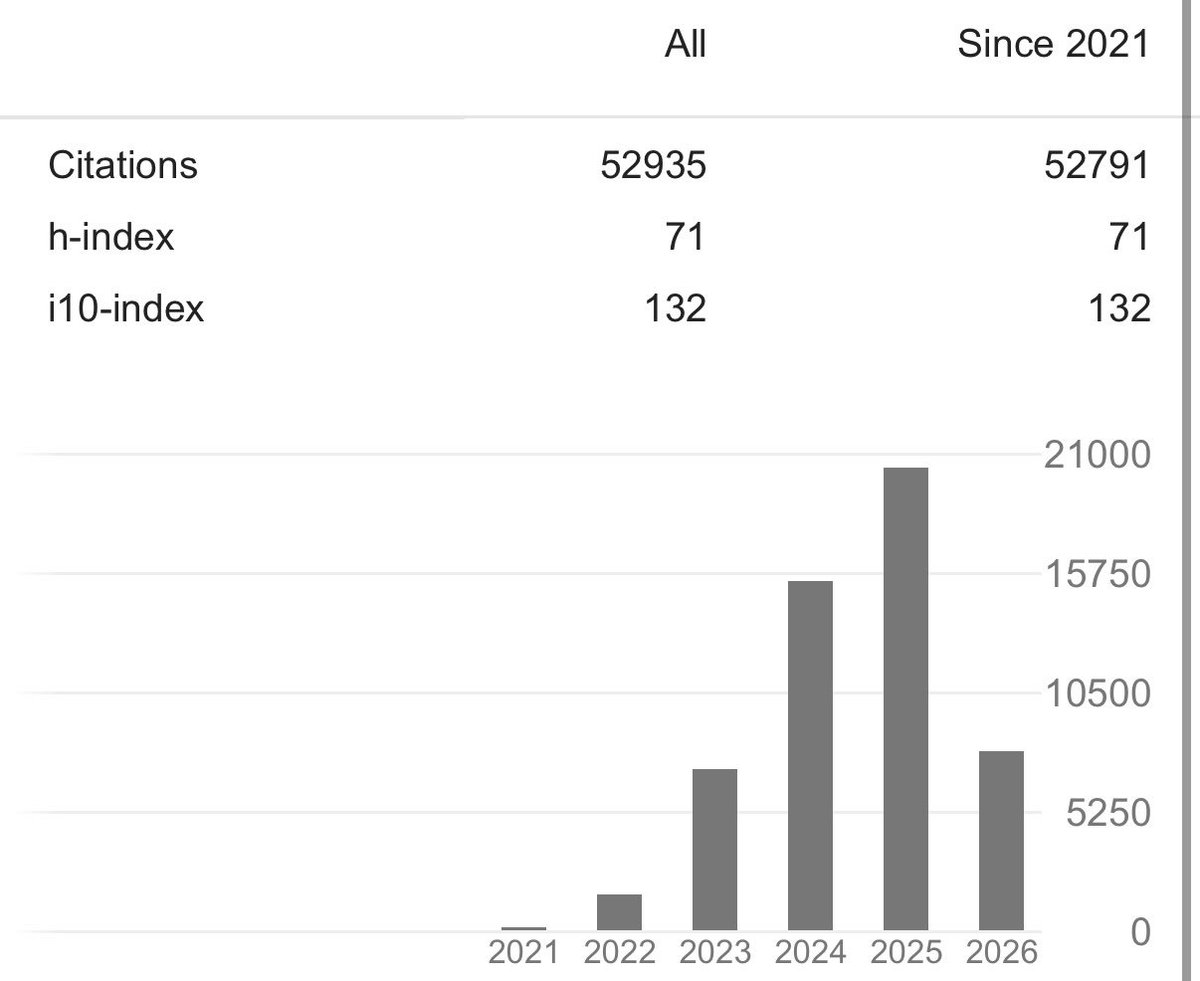
@catehall Hi! I run @AiEleuther, one of the world’s foremost non-profit AI research institutes that a) has staff that actually know how to train models b) is a 501(c)(3) https://scholar.google.com/citations?hl=en&user=to2WKckAAAAJ&view_op=list_works
@catehall @AiEleuther We are most famous for: 1. Starting the modern open source LLM movement and setting the high water mark for openness. 2. The most widely used eval framework for LLMs. 3. Introducing SAEs as a tool for interpretability 4. Introducing RoPE to the West and inventing ctx extention
Stella Biderman@BlancheMinerva@catehall @AiEleuther Our primary driving vision is: what is the most important work for serious technical experts in building AI technologies to do that is financially or politically disincentivized at the tech companies that employ 99% of such people?
@catehall @AiEleuther Some of our recent high impact work recently has: 1. Building the first (and only good) openly licensed pretraining dataset 2. Showing that data filtering can limit the bad capabilities of LLMs 3. Influential technical work on SAEs, both using them and critical work
Stella Biderman@BlancheMinerva@catehall @AiEleuther We are most famous for: 1. Starting the modern open source LLM movement and setting the high water mark for openness. 2. The most widely used eval framework for LLMs. 3. Introducing SAEs as a tool for interpretability 4. Introducing RoPE to the West and inventing ctx extention
@catehall @AiEleuther We are heavily financially bottlenecked right now and if we had 2x the funding we could easily do 2x the work we are currently doing. I’d love to talk about becoming a client!
Stella Biderman@BlancheMinerva@catehall @AiEleuther Some of our recent high impact work recently has: 1. Building the first (and only good) openly licensed pretraining dataset 2. Showing that data filtering can limit the bad capabilities of LLMs 3. Influential technical work on SAEs, both using them and critical work
 #392Dean W. Ball@DEANWBALL
The answer to this strikes me as obvious: “yes.”
Presumably OP is not saying, “this wealth should be spent on Porsches and Pateks instead of being spent on philanthropy!” Rather she seems to be hinting that the government should expropriate this wealth and spend it on <?????>. That’s what “in a democracy” is usually code for in contexts like this, by the way. It’s code for giving the government more money and power. Ironic, given the origins of American democracy.
Anyway, no, the government would have no idea what to spend this money on. Statistically speaking, this fortune, in the hands of the state, would most likely be squandered on old people’s retirement benefits, interest on debt, and weapons. “In a democracy.”
There are a ton of important things we will need to invest in to “make AI go well.” Long-range, bold, ambitious investments made by prudent and wise people. I do not know what species of delusion one must have to believe that the US government is well positioned to serve that role. America is fortunate to have a private sector and civil society that at least has a fighting chance of being up to the task.
There are many things I hope government will do during the AI transformation, but the expropriation gestured at below needs much more thought and justification than “in a democracy”-style sloganeering.

I like this! Noting, however, that depending on who says something like this and in which room, I may interpret it very differently.
Version 1: "Tax the rich, give to the poor" Version 2: "We need more AI4good nonprofits" Version 3: "We need to invest more in 'ai4good' for-profits"
I'm all for 1-2, just not 3. And based on how you say this would cost billions, I imagine we're on the same page.
 jessica dai@jessicadai_
PERSONALLY if I had access to ~unprecedented billions~ of AI cash and wanted to "make sure AI goes well," I would probably spend it on things that would allow the public to experience the benefits of that wealth.... infrastructure healthcare transit education environment art ....
 #615Logan Graham@LOGANGRAHAM
Within ~2 years, there might be >0.5 Manhattan Projects worth of philanthropic $$$ to spend on the biggest challenges, like cyber or biodefense.
@nanransohoff is right: the hard part is finding enough good organizations to spend the $.
You should build one!
Nan Ransohoff@nanransohoffNew blog post: The third wave of American philanthropy Hundreds of billions of dollars in new philanthropic capital will soon become liquid. The OpenAI Foundation holds 26% of OpenAI, worth about $220B at today’s valuation. Anthropic’s seven co-founders have pledged to give away 80% of their wealth and have instituted the most aggressive donor matching program for employees in tech history. How much does this all add up to? And how meaningful is that in the context of philanthropy today? I was doing some simple napkin math to wrap my head around the scale of what’s coming, and radicalized myself in the process. I had dramatically underappreciated the scale of the philanthropic capital that’s about to become available and the corresponding gap in talent and organizations that will be needed to make the most of it. This piece aims to directionally sketch the scale of what’s coming, the gap in operational capacity needed to absorb it, and what we can do to fill it. (Link to full post in reply)
@nanransohoff Also, I'm pretty bullish that industry + philanthropy can together nearly solve biodefense + cyberdefense via innovation
And this scale of money is about the scale needed to do it.
Logan Graham@logangrahamWithin ~2 years, there might be >0.5 Manhattan Projects worth of philanthropic $$$ to spend on the biggest challenges, like cyber or biodefense. @nanransohoff is right: the hard part is finding enough good organizations to spend the $. You should build one!
@tszzl I'll take it and turn it into computronium tyvm
 roon@tszzl
it will be very hard to productively spend this scale of philanthropic capital effectively, it seems already quite hard
 #839Beff (e/acc)@BEFFJEZOS
Capitalism is literally a democratic allocation of capital.
The people have way more bits of control over allocation of capital towards solving problems.
In this case, all this philanthropy will be way more democratic than letting a few in power have the decision monopoly
Dean W. Ball@deanwballThe answer to this strikes me as obvious: “yes.” Presumably OP is not saying, “this wealth should be spent on Porsches and Pateks instead of being spent on philanthropy!” Rather she seems to be hinting that the government should expropriate this wealth and spend it on <?????>. That’s what “in a democracy” is usually code for in contexts like this, by the way. It’s code for giving the government more money and power. Ironic, given the origins of American democracy. Anyway, no, the government would have no idea what to spend this money on. Statistically speaking, this fortune, in the hands of the state, would most likely be squandered on old people’s retirement benefits, interest on debt, and weapons. “In a democracy.” There are a ton of important things we will need to invest in to “make AI go well.” Long-range, bold, ambitious investments made by prudent and wise people. I do not know what species of delusion one must have to believe that the US government is well positioned to serve that role. America is fortunate to have a private sector and civil society that at least has a fighting chance of being up to the task. There are many things I hope government will do during the AI transformation, but the expropriation gestured at below needs much more thought and justification than “in a democracy”-style sloganeering.
@calebwatney Then we’ll be able to resolve whether to call them institute for progresses or institutes for progress
 Caleb Watney@calebwatney
yes, the bottleneck if you go the org building route is mostly just talent (there are not another 5 CG's worth of good capital allocators in philanthropy, nor is the equivalent number of founders available to run orgs that these allocators could grant to)
this is partly because the non-profit ecosystem is just much less compelling to top talent than the for-profit one.
therefore, you need to figure out how to use this capital some other way...
roon@tszzlit will be very hard to productively spend this scale of philanthropic capital effectively, it seems already quite hard
 #1060Seth Lazar@SETHLAZAR
This is a good point well made. An earlier age of philanthropy created many public goods that people still enjoy today, and manifested a sense of reciprocity that helps sustain stable societies through rapid social and technological change. I don’t think many people still believe that reciprocity exists; the consequences of it fading out are easy to predict.
jessica dai@jessicadai_PERSONALLY if I had access to ~unprecedented billions~ of AI cash and wanted to "make sure AI goes well," I would probably spend it on things that would allow the public to experience the benefits of that wealth.... infrastructure healthcare transit education environment art ....
 #1092Chris Painter@CHRISPAINTERYUP
+1
 Alec Stapp@AlecStapp
We are entering a new era where the binding constraint on philanthropic startups is no longer funding. The scarce factors are good ideas & the talent who can execute on them. Now is the time for entrepreneurial people to start new organizations that create public goods.

@catehall woah based
Cate Hall@catehallI’m building a multifamily office for this population, where philanthropic capital will be managed as seriously and creatively as investment capital. We’re not at “public launch” stage yet, but since Nan’s tweet is doing numbers I wanted to put up a signal flare.

@tszzl give it to mckenzie & melinda, problem solved.
roon@tszzlit will be very hard to productively spend this scale of philanthropic capital effectively, it seems already quite hard
 #1196Matt Clifford@MATTHEWCLIFFORD
Excellent and important post on an underrated topic: what will AI wealth do to philanthropy?
Nan Ransohoff@nanransohoffNew blog post: The third wave of American philanthropy Hundreds of billions of dollars in new philanthropic capital will soon become liquid. The OpenAI Foundation holds 26% of OpenAI, worth about $220B at today’s valuation. Anthropic’s seven co-founders have pledged to give away 80% of their wealth and have instituted the most aggressive donor matching program for employees in tech history. How much does this all add up to? And how meaningful is that in the context of philanthropy today? I was doing some simple napkin math to wrap my head around the scale of what’s coming, and radicalized myself in the process. I had dramatically underappreciated the scale of the philanthropic capital that’s about to become available and the corresponding gap in talent and organizations that will be needed to make the most of it. This piece aims to directionally sketch the scale of what’s coming, the gap in operational capacity needed to absorb it, and what we can do to fill it. (Link to full post in reply)
 #1220rohit@KRISHNANROHIT
Ideas. For $35b a year you could create and run 5 new Harvards
Nan Ransohoff@nanransohoffNew blog post: The third wave of American philanthropy Hundreds of billions of dollars in new philanthropic capital will soon become liquid. The OpenAI Foundation holds 26% of OpenAI, worth about $220B at today’s valuation. Anthropic’s seven co-founders have pledged to give away 80% of their wealth and have instituted the most aggressive donor matching program for employees in tech history. How much does this all add up to? And how meaningful is that in the context of philanthropy today? I was doing some simple napkin math to wrap my head around the scale of what’s coming, and radicalized myself in the process. I had dramatically underappreciated the scale of the philanthropic capital that’s about to become available and the corresponding gap in talent and organizations that will be needed to make the most of it. This piece aims to directionally sketch the scale of what’s coming, the gap in operational capacity needed to absorb it, and what we can do to fill it. (Link to full post in reply)
I only point to this to note a paucity of imagination. Other ideas: 1) You could fund an actual country. Buy out Iceland, Estonia and Cyprus for 35B 2) Fund and run NASA + NOAA 3) Fund 350k full time writers and artists bring about the renaissance
rohit@krishnanrohitIdeas. For $35b a year you could create and run 5 new Harvards
@catehall Very cool, and intrigued! I'd love to contribute more crazy ideas to it, at the very least.
Cate Hall@catehallI’m building a multifamily office for this population, where philanthropic capital will be managed as seriously and creatively as investment capital. We’re not at “public launch” stage yet, but since Nan’s tweet is doing numbers I wanted to put up a signal flare.
 #1447Ben Golub@BEN_GOLUB
Alert for economists
Nan Ransohoff@nanransohoffNew blog post: The third wave of American philanthropy Hundreds of billions of dollars in new philanthropic capital will soon become liquid. The OpenAI Foundation holds 26% of OpenAI, worth about $220B at today’s valuation. Anthropic’s seven co-founders have pledged to give away 80% of their wealth and have instituted the most aggressive donor matching program for employees in tech history. How much does this all add up to? And how meaningful is that in the context of philanthropy today? I was doing some simple napkin math to wrap my head around the scale of what’s coming, and radicalized myself in the process. I had dramatically underappreciated the scale of the philanthropic capital that’s about to become available and the corresponding gap in talent and organizations that will be needed to make the most of it. This piece aims to directionally sketch the scale of what’s coming, the gap in operational capacity needed to absorb it, and what we can do to fill it. (Link to full post in reply)
 #1463clare ❤️🔥@CLAREJTBIRCH
go work with cate. this would be an incredible thing to build. go go go
Cate Hall@catehallI’m building a multifamily office for this population, where philanthropic capital will be managed as seriously and creatively as investment capital. We’re not at “public launch” stage yet, but since Nan’s tweet is doing numbers I wanted to put up a signal flare.
#1653jessica dai@JESSICADAI_PERSONALLY if I had access to ~unprecedented billions~ of AI cash and wanted to "make sure AI goes well," I would probably spend it on things that would allow the public to experience the benefits of that wealth.... infrastructure healthcare transit education environment art ....
Nan Ransohoff@nanransohoffNew blog post: The third wave of American philanthropy Hundreds of billions of dollars in new philanthropic capital will soon become liquid. The OpenAI Foundation holds 26% of OpenAI, worth about $220B at today’s valuation. Anthropic’s seven co-founders have pledged to give away 80% of their wealth and have instituted the most aggressive donor matching program for employees in tech history. How much does this all add up to? And how meaningful is that in the context of philanthropy today? I was doing some simple napkin math to wrap my head around the scale of what’s coming, and radicalized myself in the process. I had dramatically underappreciated the scale of the philanthropic capital that’s about to become available and the corresponding gap in talent and organizations that will be needed to make the most of it. This piece aims to directionally sketch the scale of what’s coming, the gap in operational capacity needed to absorb it, and what we can do to fill it. (Link to full post in reply)
I'd maybe deprioritize, checks notes, 5000 thinktanks or the nth nonprofit "alignment" "research" institute but, really, what do I know
jessica dai@jessicadai_PERSONALLY if I had access to ~unprecedented billions~ of AI cash and wanted to "make sure AI goes well," I would probably spend it on things that would allow the public to experience the benefits of that wealth.... infrastructure healthcare transit education environment art ....
 #1735Andy Masley@ANDYMASLEY
A little nuts
 Andy Matuschak@andy_matuschak
Intense vertigo thinking about @nanransohoff's numbers. Based on current pledges/valuations, AI philanthropic giving would saturate an additional 300+ Arc Institutes, i.e. an extra 80K employees. Or 5,000 Institutes for Progress, demanding 200K employees! https://nanransohoff.substack.com/p/the-third-wave-of-american-philanthropy
@jessicadai_ Where are you quoting the “make sure AI goes well” from?
jessica dai@jessicadai_PERSONALLY if I had access to ~unprecedented billions~ of AI cash and wanted to "make sure AI goes well," I would probably spend it on things that would allow the public to experience the benefits of that wealth.... infrastructure healthcare transit education environment art ....
.@nanransohoff's framing is better than mine, but worth noting that again, if you wanted this take 6 months ago, subscribe to my blog.
 Nan Ransohoff@nanransohoff
New blog post: The third wave of American philanthropy Hundreds of billions of dollars in new philanthropic capital will soon become liquid. The OpenAI Foundation holds 26% of OpenAI, worth about $220B at today’s valuation. Anthropic’s seven co-founders have pledged to give away 80% of their wealth and have instituted the most aggressive donor matching program for employees in tech history. How much does this all add up to? And how meaningful is that in the context of philanthropy today? I was doing some simple napkin math to wrap my head around the scale of what’s coming, and radicalized myself in the process. I had dramatically underappreciated the scale of the philanthropic capital that’s about to become available and the corresponding gap in talent and organizations that will be needed to make the most of it. This piece aims to directionally sketch the scale of what’s coming, the gap in operational capacity needed to absorb it, and what we can do to fill it. (Link to full post in reply)
This article has some good content, but it feels like it's asking 'other people' to do things.
I suggest spending 3 minutes thinking if you should run an org, or solve a problem and if not, then forget about it until next time you ponder.
Nan Ransohoff@nanransohoffNew blog post: The third wave of American philanthropy Hundreds of billions of dollars in new philanthropic capital will soon become liquid. The OpenAI Foundation holds 26% of OpenAI, worth about $220B at today’s valuation. Anthropic’s seven co-founders have pledged to give away 80% of their wealth and have instituted the most aggressive donor matching program for employees in tech history. How much does this all add up to? And how meaningful is that in the context of philanthropy today? I was doing some simple napkin math to wrap my head around the scale of what’s coming, and radicalized myself in the process. I had dramatically underappreciated the scale of the philanthropic capital that’s about to become available and the corresponding gap in talent and organizations that will be needed to make the most of it. This piece aims to directionally sketch the scale of what’s coming, the gap in operational capacity needed to absorb it, and what we can do to fill it. (Link to full post in reply)
A longer take.

 Nathan is in.. Maine 🔎@NathanpmYoung
This article has some good content, but it feels like it's asking 'other people' to do things. I suggest spending 3 minutes thinking if you should run an org, or solve a problem and if not, then forget about it until next time you ponder.