Differences in blood pressure and cholesterol were apparent up to 30 years before a first cardiovascular event in a study of 113,612 adults. The University of Edinburgh-led research suggests an opportunity for earlier prevention. SourceSource
The observational study, published in JAMA Network Open, examined average patterns across groups. It did not establish cause and effect or validate a way to forecast an individual’s heart attack or stroke decades ahead. Source
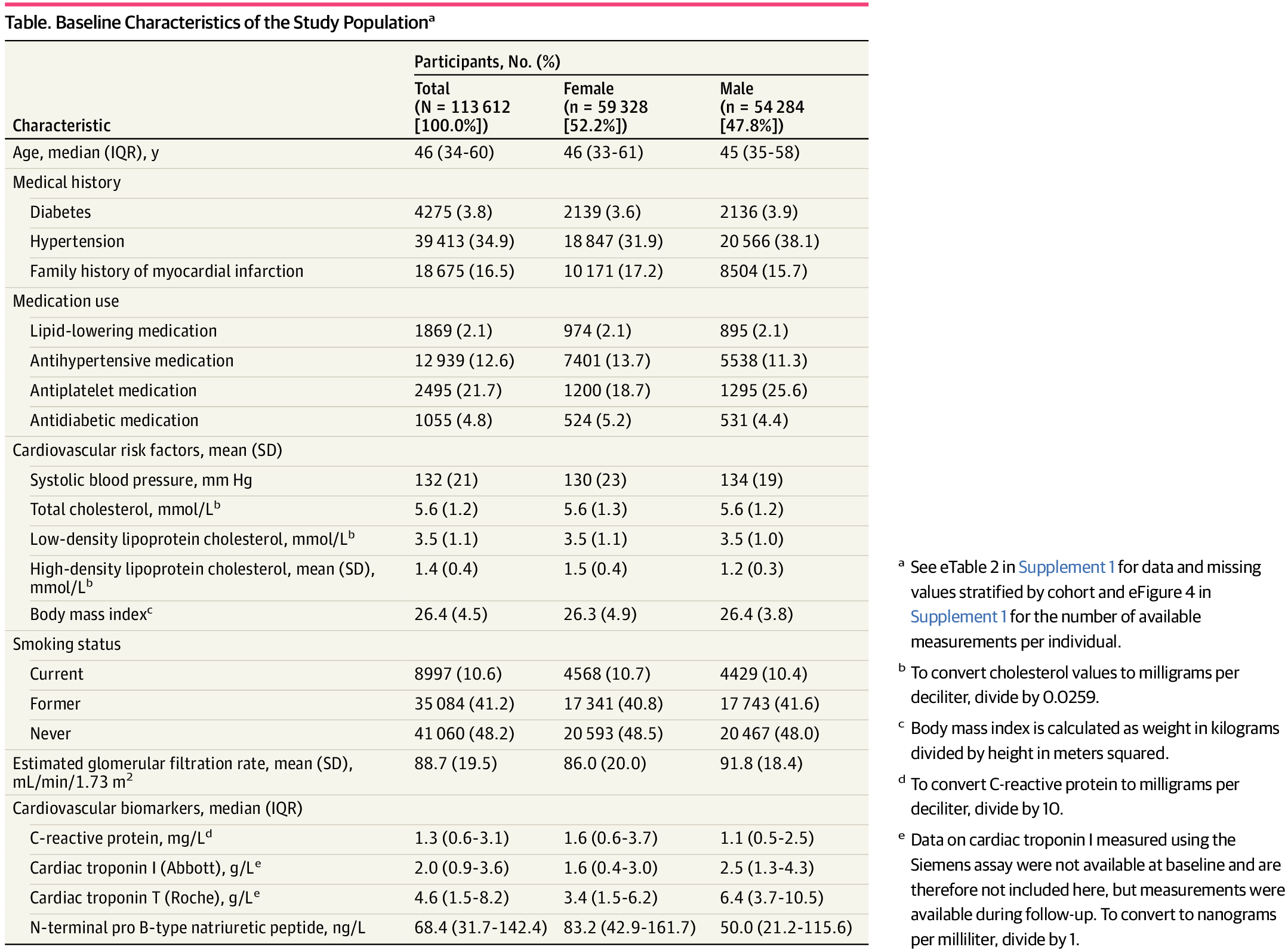
Researchers combined four population studies from the United States, Norway and United Kingdom, using data spanning 1985–2019. Participants had no history of heart attack or stroke at enrollment. During a median follow-up of 18.9 years, 8,025 women and 8,892 men experienced a first cardiovascular event, defined as a nonfatal heart attack, nonfatal stroke or cardiovascular death. SourceSource
A four-point gap, decades before
Systolic blood pressure measures the pressure in the arteries when the heart contracts. Thirty years before an event, the estimated group average was 121 mm Hg among women who later experienced an event, versus 117 in event-free survivors. At the event or end of observation, the corresponding estimates were 137 and 130 mm Hg. Source
The early gap was modest, but it persisted across decades. Source
The figures come from models that accounted for age, sex, differences between cohorts and relevant medication use, according to News-Medical. Where applicable, the reported averages were modeled for people not taking the relevant medications. The main comparison used a reference age of 69 at an event or the end of observation. Source
Blood-pressure and cholesterol differences appeared as early as 30 years beforehand in both sexes. People who later experienced events also had lower HDL cholesterol, less physical activity and lower estimated glomerular filtration rates, a measure of kidney function. Source
Blood markers followed different timelines, too. Cardiac troponin I levels measured using the Abbott assay differed between groups as early as 30 years before an event. The protein is a marker of heart-muscle injury. NT-proBNP, a marker of strain on the heart, began to differ about 10 years beforehand. Thirty years is not a blanket timetable for every marker. Source
Age and sex also shaped the patterns. Women’s estimated systolic pressure rose faster with age and overtook men’s in the mid-60s. Differences in diabetes and body mass index were more pronounced among people whose cardiovascular events occurred at younger ages. SourceSource
A prevention opportunity, not a new screening rule
Dorien Kimenai, a British Heart Foundation research fellow at Edinburgh’s Usher Institute, said the findings “show that modifiable risk factors begin to diverge 30 years before a cardiovascular event occurs.” She described that separation as an opportunity to develop earlier prevention strategies. Source
Whether adding long-term biomarker measurements improves individual prediction or helps prevent cardiovascular events still needs testing. SourceSource
Measurements were not consistently available across studies and visits, blood-test processing varied, and loss to follow-up could have biased the results. Medication-related selection effects may also have influenced the estimates. The researchers lacked sufficient data to examine patterns by ethnicity. Source
For now, British Heart Foundation chief scientific and medical officer Bryan Williams points to established checks, including blood pressure and cholesterol, as ways to understand cardiovascular risk. Source



Comments